


In this week’s column, I take on the fantasy that the Church was nearly perfect until Vatican II came along and ruined everything. The imperfections are real. The diagnosis is not.
It’s been a busy week for me at The Forge, particularly throughout the watchtowers of social media. I’ve been posting a lot about the Society of St. Pius X—not simply news updates that you can get from everyone else, but commentary on the reporting, with additional substance and analysis that you’ll only get from The Forge.
But on top of all of that, there has been a lot of action on social media. Traditionalists and SSPX supporters have been taking me to task for every analysis, fact, or opinion I’ve posted about the schismatic group and about traditionalism in general. Addressing the commenters has kept me almost as busy as the writing!
A lot of traditionalists have also been flooding social media with images and videos of alleged liturgical abuse. Much of what they are showing is not technically liturgical abuse, because it is not happening during the liturgy, but it is still legitimately offensive. The problem is not always the evidence itself. It is the sweeping conclusion they draw from it: that these incidents are signs of a Church in collapse and proof that a faulty Vatican Council ruined the Mass and created the conditions for the ruin of the Church.
I’m seeing that same pattern throughout the comments and pushback. It is not merely that the responses are reactionary. It is what they are reacting to and what they believe those things prove. Catholics who are tradition-leaning often seem to treat anything in the Church that deviates from an image of perfection as evidence that something is fundamentally wrong with the Church itself.
These diagnoses overreach.
(Continues below)
It’s true that a priest shouldn’t be riding a scooter during the recessional after Mass. It's true people shouldn't be popping wheelies up the sanctuary steps into the sanctuary. It’s true that things happen in the modern Church that, even when they do not cross the line into liturgical abuse (because it isn't during a liturgy), are incredibly disrespectful and wrong.
There is no defense for outrages like these, and I am not trying to defend them. I am trying to put them in context.
They're not evidence of a flawed Catholic Church, they're evidence of flawed Catholics. And that is something that traditionalists either can't grasp or conveniently choose to ignore so that they can pin it on the Church or the Council instead.
It’s also true that bishops and cardinals, including some in the Vatican, have occasionally said or written ridiculous things, either recently or in the past (or even recently!). But sound and valid theological methodology will often also surface the errors in one's ideas. That shouldn't be shocking at all. It's an exhibit of imperfection that's as old as the church itself.
Should imperfection in the Church shock anybody? There has always been imperfection in the Church. Do people imagine that the Church was vested in perfection before the Second Vatican Council?
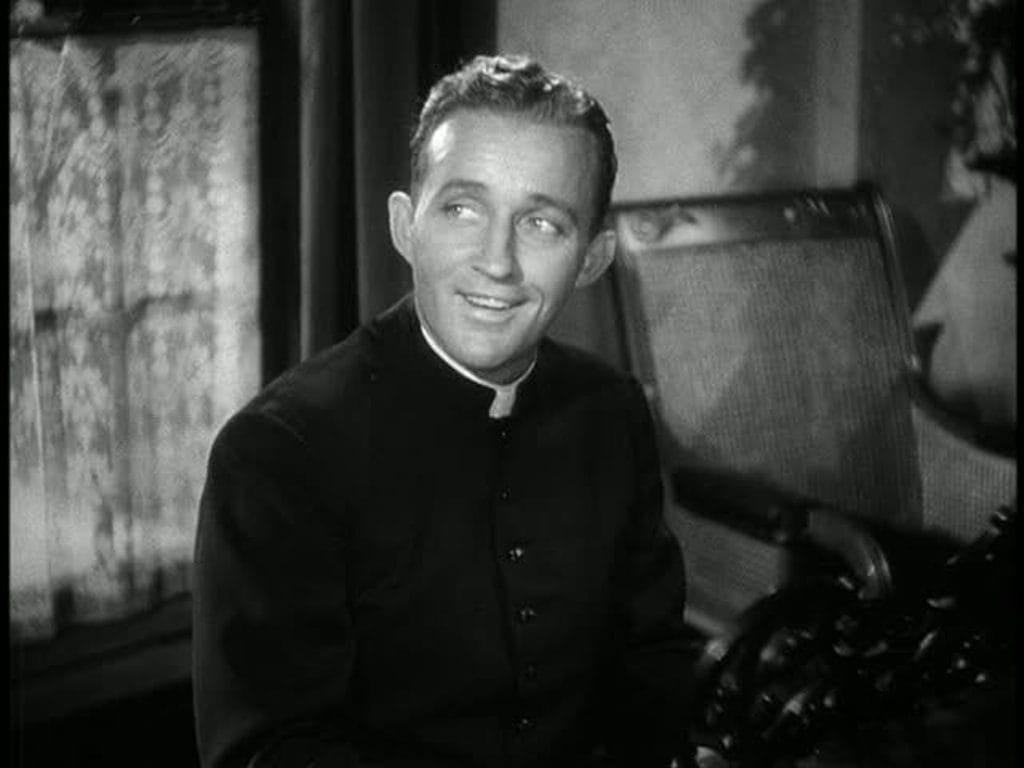
We are not living in a Bing Crosby movie—more’s the pity. So I don't understand what traditionalists or others expect to find in a church populated by imperfect human beings. The church exists in real life, not on the silver screen. Do people believe that the imperfection intrinsic to fallen human nature is absent from traditionalist circles or the SSPX?
It may be true, at least to some extent, that the implementation of Vatican II created an atmosphere in which certain imperfections could surface, where they had no space before. But to believe imperfections didn't find other ways to express themselves before Vatican II is naive and foolish.
We’re not living in a Bing Crosby movie. I wish we were. The imperfections intrinsic to the fallen human order existed long before the 1960s, as much as today—they simply showed themselves differently.
There is a potential benefit to the imperfections of human beings in the Church being on clearer display today than in the past. They can prompt a call to holiness that counterbalances the imperfection we see.
Unfortunately, the response of many people in the Church is merely to complain about it, to use it to spin tales of doom, gloom, and woe about the Catholic Church, and to treat it as an excuse to run and hide within subcultures they imagine exhibit nothing but perfection.
Be better, my people. God wills it.
-TJ


Member discussion