The SSPX, the Arian Crisis, and the False History of a Faithful Remnant
SSPX defenders use the Arian crisis, Pope Liberius, and Antipope Felix II to make resistance to Rome look like fidelity. But the real history exposes the myth.
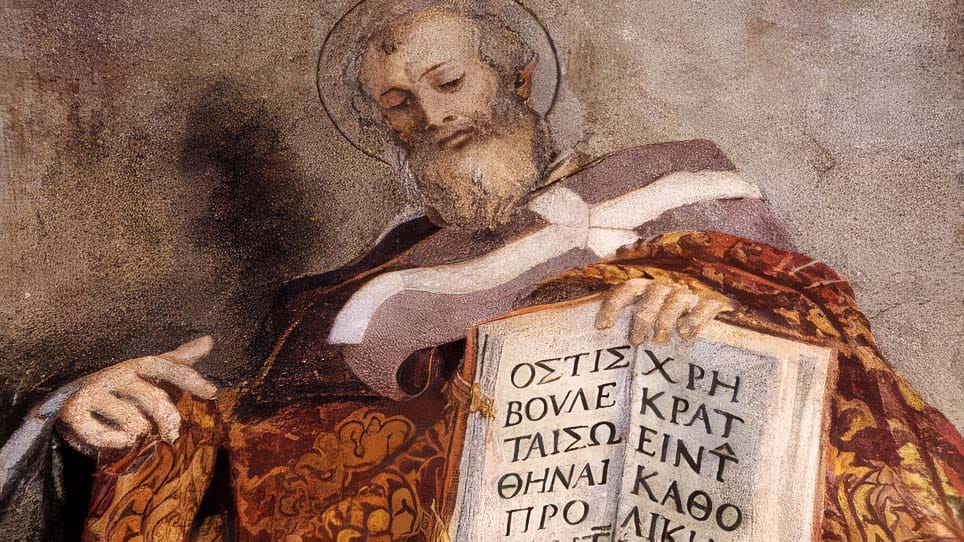
St. Athanasius (More about this art can be found in the Afterthoughts segment at the end of this piece.
There's a particular mistake that only smart people make. They're so sure they're right that they call a witness to the stand without ever checking whose side he's on.
💡
Paid Members: there's an Afterthought segment for you, at the bottom of this article. Don't miss it.
There are Protestants who quote St. Jerome to tear down the Catholic Church. Jerome, of all people. The same Jerome who defended Mary's perpetual virginity against Helvidius, who defended the veneration of relics against Vigilantius, who upheld the authority of the Roman See, and who gave the Church the Latin Vulgate.
Pull one line out of context and it might do the job. But then...
You can only turn him into a witness against the Church by reading him in slivers and never letting him finish a paragraph. Pull one line out of context and it might do the job. Step back and take in the whole man, and the strategy defeats itself. He's not testifying against the Church. He's testifying for her, at the top of his voice, in nearly everything he wrote.
The SSPX supporters' version runs on the same fuel. Both need Church history so badly that they'll manufacture it if they have to, and both do it by isolating a fragment from the body it belongs to. In their case the raw material is the fourth century and the Arian crisis. They need a Church that had already collapsed into heresy, a papacy that had already failed, so that breaking from Rome—or the resistance to it—looks less like schism and more like a rescue.
So they go looking, and when they can't find it, they build it with invented facts and distortions of history. It includes false claims of "90% of the Church in heresy", a pope who supposedly gave his blessing to Arianism, an antipope inflated into a ten-year imperial reign.
Each piece is either false outright or a real fact bent past what it can bear. And like the Protestant with his Jerome, they never step back far enough to notice that the whole picture testifies against them.
So let's take the claims one at a time, because the construction is the point.
The Claims
Ninety percent of the Church fell into heresy: This is the cornerstone; it's what everything else is built on on. If almost the whole Church went heretic and survived, then a faithful remnant standing apart from the official Church isn't schism, it's the rescue party.
That's what the “90%” figure is for. It makes the problem absolute, and even dire. The problem is that there's no such number anywhere in the historical record. It’s made up. These are the people pressuring the Church and pressuring Catholics to “wake up” to the heresy all around them and trust traditionalism as the rescue of the Church. But their case depends on invented numbers, distorted history, and theological conclusions built on both. And yet we are supposed to trust their theology?
That’s not scholarship, it’s theater.
What the record shows is that Arianism spread widely in the fourth century, especially in the East, and that under imperial pressure many bishops signed creedal formulas, statements of belief they should have refused, statements that either taught the Arian position outright or were worded vaguely enough to imply it.
That's a real crisis already, and it doesn't need exaggerating. Still, “many bishops gave way under pressure” and “ninety percent of the Church was heretical” are not the same statement. Duress and intent are also not the same motivators. This claim paints a picture that doesn’t represent the reality, to draw a parallel to a modern scenario that’s also the product of imagination.
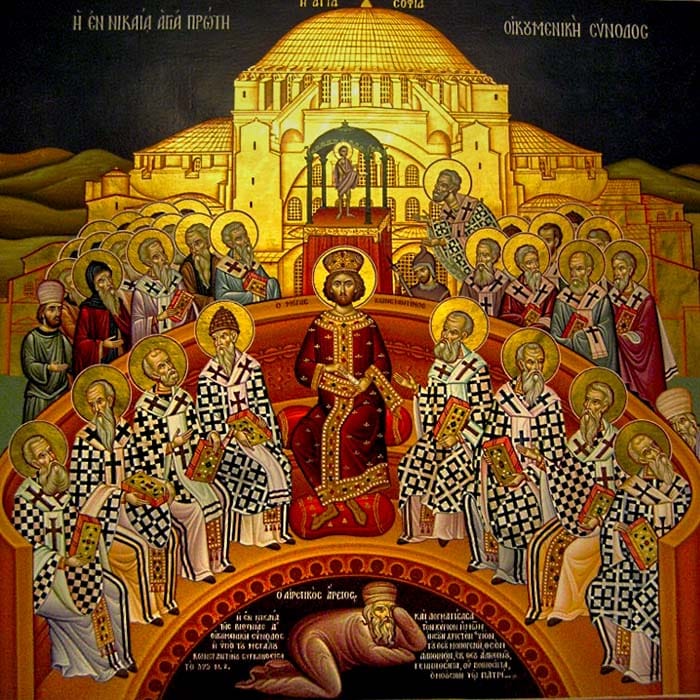
An icon from the time shows the First Council of Nicaea, which opposed Arius, who is shown at the bottom of the image, to show his defeat. The central figure is Emperor Constantine.
Claim: The pope gave tacit approval to Arianism.
This one targets the papacy itself. If a pope endorsed heresy, then the papacy is vulnerable in its role of safeguarding the deposit of faith. If it can run afoul then, surely it can be on the wrong side of orthodoxy today.
That’s what They want you to believe anyway, and that's why they take aim at the papacy. If the Pope or the Vatican can err on matters of faith and morals, then breaking away from it starts to look like fidelity to Christ rather than rebellion. And so this is an important illusion to manufacture.
The pope they point to is Liberius. In exile and under severe pressure, he seems to have signed an ambiguous Arian credal formula and agreed to the condemnation of Athanasius. I say “seemed to” because historians still aren't sure he signed anything at all. But the people making the claim insist that he did.
And here's what nobody pushing this claim will admit: we don't actually know what was going on with Liberius. Did he cave, or was he playing a longer game, doing what he had to in order to get back to his see and defend the faith from the chair that was rightly his? Was the signature real surrender, or a move to outmaneuver an emperor who had already installed a false pope in his place?
This was not a pastor folding under pressure from a difficult parishioner. This was the pope against the emperor, exiled from Rome while a handpicked antipope sat in his place, with the whole Church hanging on what happened next. The stakes and the pressures were enormous, and the historians who have spent their lives on this still can't agree on what Liberius did or why.
So here's the question worth sitting with. If the trained historians can't settle it, why are we taking the word of storytellers with social media accounts? And if that's how carelessly they handle the history, why would anyone trust their theology?
Claim: The antipope Felix ruled for ten years and was only declared an antipope in 1947.
This is the most carefully built argument of the three, because nearly every piece of it sounds true. Lies can't create something from nothing. They rely on the material of facts, but what you get when those facts are cut and reassembled is not the truth. It's an impostor.
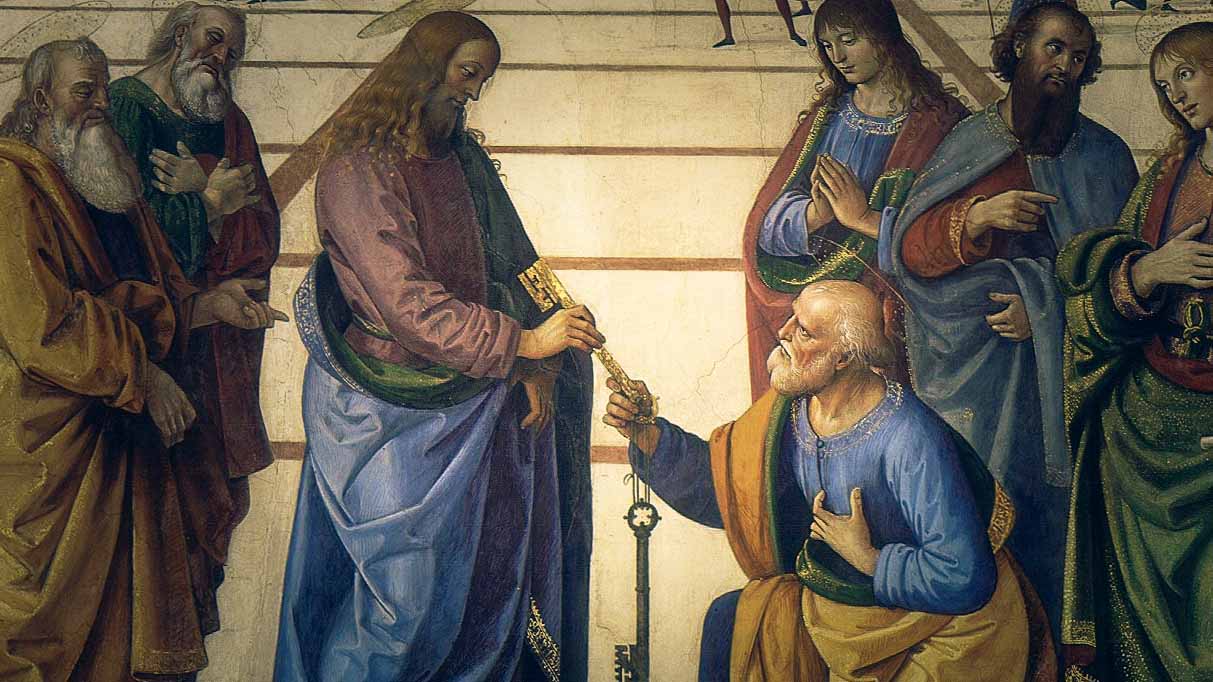
Christ gives Peter the keys, entrusting him with authority to bind, loose, guard, and shepherd the Church. That authority does not disappear when the Church enters crisis; it is precisely why crisis cannot become an excuse for rebellion against Rome.
Its purpose is to suggest either that Rome's own records were unsure who the real pope was, or that the Vatican took that long to decide Felix wasn’t the true pope. It’s hard to know, or maybe they’re just trying to say the Vatican is that incompetent. The real motive or point of the claim is hard to infer, but here’s why I’m focusing on it: it’s yet another demonstration of the invention of facts.
The Arian emperor did install Felix, that part is true. But Felix was installed in Liberius's place for two or three years, not ten. He was removed as soon as the rightful pope returned.
Also there wasn’t a “declaration” that Felix was an antipope. In 1947 the Vatican revised the Annuario Pontificio, the Pontifical Yearbook. It's the Vatican's official directory, and among other things it carries the historical list of the popes. Felix was actually carried on the list of popes as “Pope Felix II” for centuries, because of the mistaken-identity mixup with the Roman martyr. That's why the later legitimate popes named Felix got bumped in their numbering, Felix III, IV, and so on. So this wasn't just a footnote or a table entry; the confusion had put him into the papal succession itself.
What changed in 1947 is that the Annuario Pontificio was revised to reflect what historians already knew, listing him as an antipope rather than carrying him in the line of true popes. It’s a clerical correction, not a judgement after the fact.
That’s the whole method, start to finish: take something true and make it false by distortion, misinterpretation, or attaching it to manufactured facts.
And here's the part neither the Protestant nor the SSPX supporter wants you to know. The real history doesn't just fail to help their case. It runs against it. The Catholic Church and the Catholic Faith survived the Arian crisis without a savior-remnant, and despite the tidal waves of resistance that came from within the Church itself.
Hold the line, Catholics. Don't be swayed by what extremists tell you, whether they come from the left or from the right. They do not own tradition, they do not own Catholic history, and they do not own the language of Catholic courage. Stay with the Church. It’s God’s will.
Afterthoughts
Afterthoughts segments are Members-only benefit.
To celebrate the relaunch of The Forge, I'm making this Afterthoughts segment temporarily available to all registered readers of the Forge, free or paid.
In this Afterthoughts segment, I talk about St. Athanasius, why he's such an important figure in the Church, and why he relates to this piece. I also share a moment, a genuine moment of surprise, in the story of how I found this image.
An Element of Surprise
I couldn't have scripted this any better. While I was looking for a lead image for this piece, I came across a medieval illumination of St. Athanasius that seemed almost too perfect.
This post is for Forge Readers.
Create a free Forge Reader account to read the full post and receive future updates.