


This is a historical article about key moments in Catholic history that mirror something I'm seeing in our own time. It's also the backstory and mission of The Forge
There have been moments in the life of the Church when the danger didn’t arrive wearing a sign. It arrived wearing a costume—to make it look like what it claimed to be. We’ve seen it in the history of the Church, and we’re seeing it again today.
The Arian Heresy
In the fourth century, the word Christian was everywhere, but the meaning of Christ was suddenly under siege. The old persecutions had ended. The blood of martyrs had barely dried. The Church, after centuries of suffering, was no longer simply being attacked from the outside. Now the threat came through sermons, bishops, imperial pressure, plausible arguments, and religious language that sounded close enough to the faith to confuse the faithful.
More Info: What Is Arianism?
Arianism was an early Christian heresy that claimed Jesus was not fully God, but a created being made by the Father. It treated Christ as less than God, even while still using Christian language about Him. The Church condemned Arianism because the Catholic faith teaches that Jesus is truly God — equal to the Father, not created.
Arianism did not begin by telling Catholics to stop believing in Jesus. It did something more subtle and more destructive. It redefined Him. It used Christian words while emptying them of their Catholic meaning. It spoke of Christ with reverence, but not with the fullness of the Truth. The result was not merely a theological dispute among scholars. It was a crisis that shook the Church from the sanctuary to the street. Bishops were divided. The faithful were confused. The empire wanted peace. The Church needed clarity.
So the Church answered.
At the Council of Nicaea (A.D. 325.), the Church did not respond with vague encouragement, soft language, or a plea for everyone to be nicer and get along. She drew a line, and held to it.
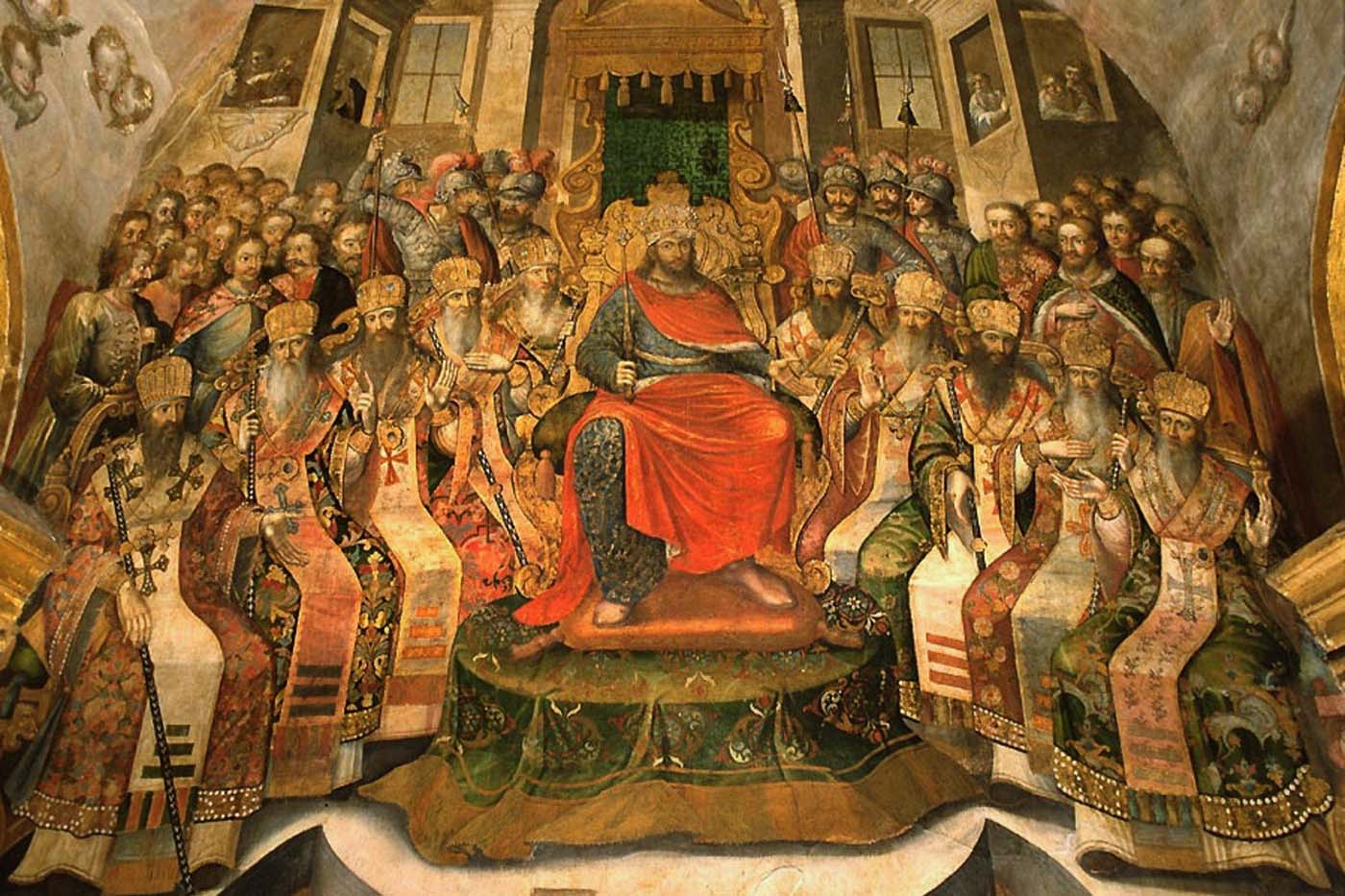
She gave the faithful words strong enough to defend the Truth: God from God, Light from Light, true God from true God, begotten, not made, consubstantial with the Father. The Creed was not an ornament. It was a weapon of clarity.
The Protestant Reformation
More than a thousand years later, another rupture came. This time the wound tore through Western Christendom. The Protestant Reformation did not simply argue about isolated abuses or bad practices. It challenged authority, sacraments, priesthood, justification, the Mass, the visible Church, and the very way Christians received the faith, and how Christians had worshiped since the 1st Century.
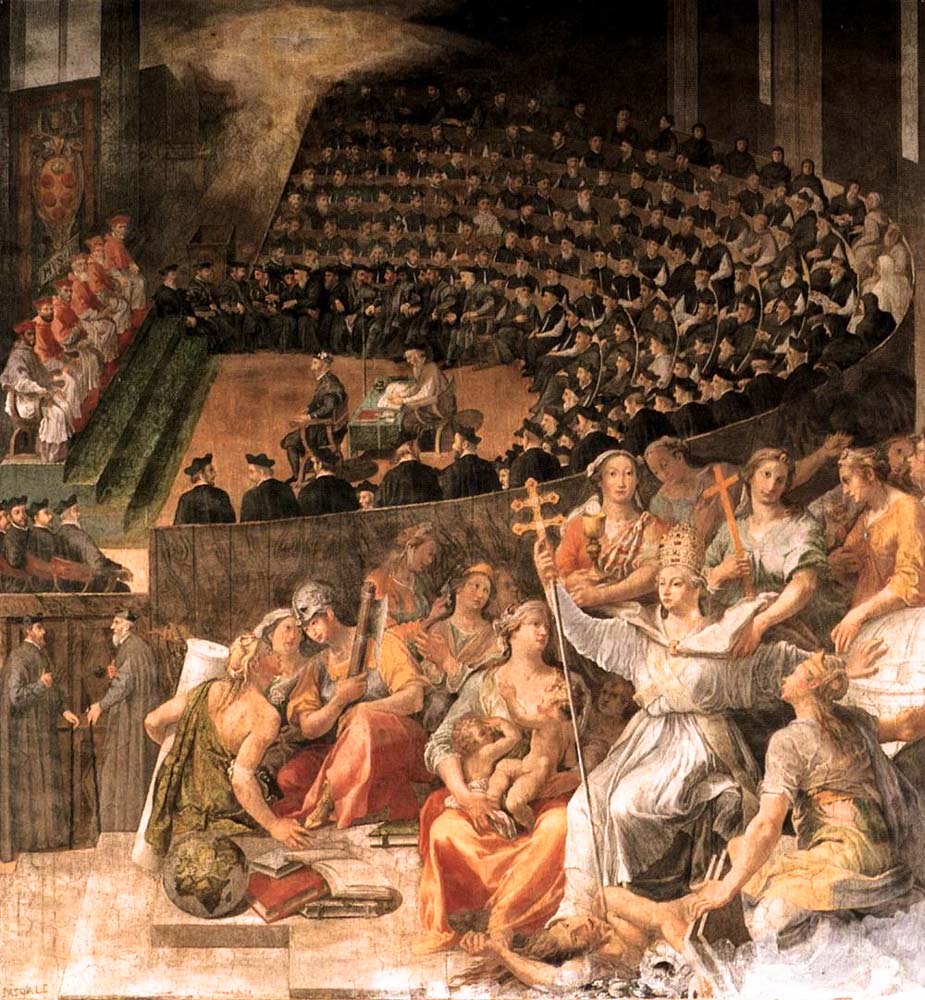
Once again, Catholic words were being contested. Once again, ordinary Catholics were forced to live through the confusion created by men who claimed to be recovering the real faith while severing themselves from the Church Christ founded.
So the Church answered again.
At Trent, the Church did not pretend the crisis was imaginary. She clarified doctrine, corrected abuses, reaffirmed the sacraments, defended the Mass, and gave the faithful a renewed structure of formation. She did not answer confusion with confusion—loose language or obscured teaching. She answered it with authority, precision, discipline, and Catholic identity.
I don't say any of this because I think every moment in history is exactly the same. It isn't. Arianism is not the Reformation, and the Reformation is not the present moment. But the pattern is strikingly familiar. The faith is rarely stolen from Catholics all at once. More often, it becomes softened over time, reworded, sentimentalized, politicized, marketed, and replaced by things that wear a "Catholic" label, but are counterfeits of the real thing.
That, my friends, is the part I can't ignore.
I see faithful Catholics formed more by the world and by secular human culture than by the Church
I see Catholics being progressively led toward counterfeits of the real faith. I see many Catholics becoming detached from the attitudes, instincts, disciplines, and intellectual habits that form a saintly people. I see faithful Catholics formed more by the world and by secular human culture than by the Church. I see brands, personalities, platforms, and movements using Catholic language while reshaping Catholic imagination into something thinner, weaker, angrier, softer, more political, more therapeutic, or more self-serving than the faith itself.
Catholics have had the trueness and reality of Catholicism stolen from them by actors labeling themselves, their brands, and their products as “Catholic,” or worse, “authentically Catholicism.” Nonsense! It's an outrage, it's a crime against the people of God, and I won't stay quiet in the face of it.
As a teacher and as an evangelizer of 30+ years, what's being perpetrated against my brothers and sisters by some Catholic influencers, and many in independent Catholic media offends me deeply. I got sick and tired of seeing it, and I wanted to do something about it in some small way. So I a Substack that I called The Forge.
But that was just the beginning.
For some time, priests and professionals I deeply respect, people who know me and my work very well, have been pushing me to think of The Forge differently. Not simply as a counter-voice, but as a real counterweight to what’s currently out there forming Catholic minds. Not merely as a place where I publish articles and commentary on Substack, but as a real independent Catholic media brand beyond the boundaries of that platform. Not bigger in size, necessarily, but bigger in posture. More deliberate. More stable. More serious about the work it exists to do.
That is why The Forge has been relocated, and relaunched.
The mission of The Forge has not changed. The work is not being softened or confused with irrelevant novelty posts. The voice is not being diluted. The Forge now hasa home that better fits what it has become and what it needs to become: a place built for Catholic commentary, strong Catholic formation, media, a clear and bold voice, and as a center of resistance to counterfeit Catholicism.
The Forge exists at the point of impact, where Truth—The Catholic faith—meets the forces trying to distort, soften, and replace it. That was true when I launched The Forge, but I understand it more clearly now (Thank you, Lord!). The work is not merely to react to bad arguments or foolish headlines. The work is to help Catholics recover the real thing: the faith as it truly is, not as the world, the media, sentimental religion, loose theology, weak commentary, or counterfeit Catholic brands have trained them to see it.
This is The Forge—a new home, a clearer mission, with the fire set to "high". Come join me by becoming a Forge Reader (free) or by supporting the work for $5/month as a Member.
Please offer a Hail Mary for the work that I'm doing here. I'm in the service of the Most Holy Virgin Mother of God, and I entrust this mission and apostolate to her.
God be with you all.
Ave Maria, Virgo Fidelis!
(Hail Mary, Faithful Virgin!)


Member discussion